The Layoff Toolkit
How to bounce back and make it suck less when after losing your job

Friends,
First, I have a special request: I am creating a Maven course on Emotional Intelligence for Leaders, and I want to better understand the real-world challenges you are facing today to ensure it provides maximum value for students. Can you do me a favor and fill out this quick, 2-minute survey by Fri, Feb 6? Thank you in advance for your insights!
Second, I have seen a number of my friends and colleagues getting laid off from Amazon and many other companies. It is a challenging and uncertain time we are facing. So I thought I’d put together a few resources to help those who are facing this situation.
♻️ Please share with your friends and colleagues who might find this useful!
A Helpful Mindset When You Are Laid Off
https://www.linkedin.com/feed/update/urn:li:activity:7423150858235756544/
by Rich Hua
Being laid off sucks. There’s no way around it.
If you’re an Amazonian (or anyone else) who’s been laid off recently, I want to share a mindset and practice that can help.
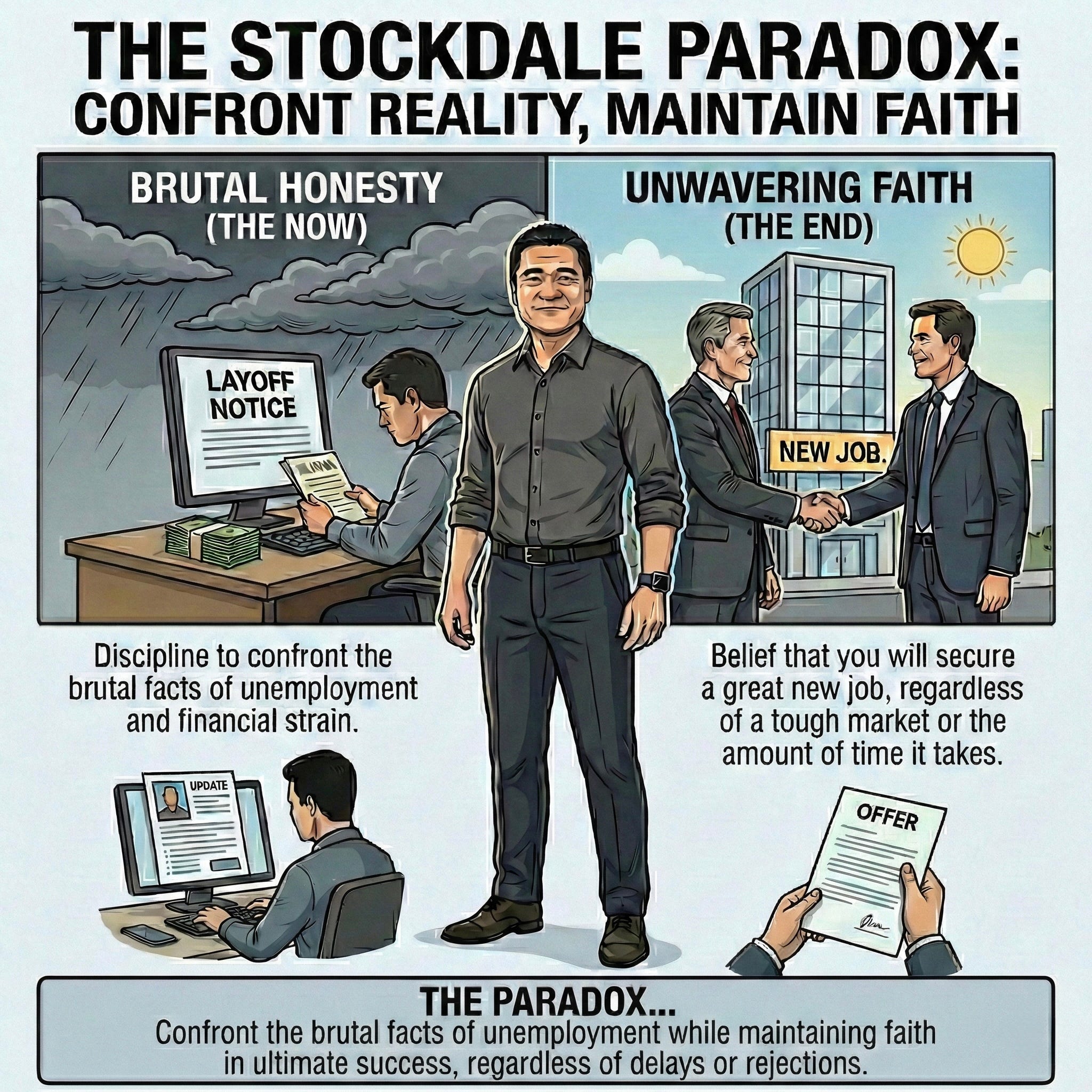
The mindset starts with the Stockdale Paradox.
Admiral Jim Stockdale was the highest-ranking POW in Vietnam. After years of brutal captivity, he observed something surprising:
The people who survived weren't the hopeless pessimists (probably obvious). But they also weren’t the wishful optimists (not so obvious).
They were the ones who faced the brutal reality of their situation (it sucks, it will be hard, they may be there for a long time) while still believing they would ultimately prevail (they will make it through, they will eventually be rescued).
Embracing this paradox produces a mindset of "realistic faith," an optimal mindset for adaptability and resilience.
To support this mindset, here are two practical actions you can take:
👉 𝗦𝘁𝗮𝘆 𝗰𝗼𝗻𝗻𝗲𝗰𝘁𝗲𝗱 𝘁𝗼 𝗽𝗲𝗼𝗽𝗹𝗲.
Human connection is a powerful resilience booster. One of the main reasons POWs survived was that they found ways to be connected to each other. Although their captors severely limited their personal interactions, they communicated with each other through a secret tapping code. It reminded them that they were not alone. You aren’t either, so stay connected.
👉 𝗗𝗼 𝘁𝗵𝗲 𝗱𝗮𝗶𝗹𝘆 "𝟯×𝟯” 𝗽𝗿𝗮𝗰𝘁𝗶𝗰𝗲.
Every day, write down:
• 3 things you are grateful for
• 3 things you accomplished (even small wins count)
Note: For gratitude, detailing specific things that happened ("I laughed really hard with my son") tends to be more effective than general things ("my kids").
These sound so simple, but they work. I've seen it in my life, and I've seen it in the lives of countless people I've coached.
There is a lot of really awesome advice out there about job searches, resumes, and interviews; I wanted to share something on the the emotional-social side because it matters just as much.
If you’re navigating this new and uncertain chapter right now, I want to say: I know it's tough. It's going to be tough for an indeterminate amount of time. You've overcome many obstacles, you've proven you can do hard things. In the end, you will prevail.
How I Bounced Back After Layoffs
https://www.linkedin.com/posts/ethanevansvp_more-layoffs-at-amazon-tech-layoffs-will-activity-7423043577661870080-Dsqg/
by Ethan Evans, former Amazon VP
More layoffs at Amazon; tech layoffs will continue all year. I was laid off twice, once 3 days after adopting my daughter. My wife had quit her job to stay at home with our new baby, and now I was out of work too.
We went from two incomes and no kids to no incomes and a child in just days.
I was *scared* as I had very little savings. But I thrived and you can too:
After this layoff, I became an Amazon VP and was able to retire early. I'm writing you this post from the middle of a 15-day ski trip through Idaho, Utah, Wyoming, and Montana (greetings from Whitefish!)
How I did it:
1) I reached out to my network to find a new job. It was 2003, like the date in the photo, and the economy was at least as tough as it is now. But I found a job with an old manager at his startup.
Most jobs (80% !!) come through networking connections.
2) I treated the job search as a full time effort, putting at least 40 hours a week into networking, meetups, etc. If you get laid off, take a few days to grieve and a few days to relax, but then get to work at your new job - of finding a job.
3) I kept trying when it got depressing. I got nowhere for 3 months. I was running out of money. But I kept at it every day. The lead came in after I thought I had tried everything.
4) I spent any time where I had no more contacts to reach out to on my skills. I learned about SQL and databases during this time.
The small "silver lining" for the Amazon folks in this particular layoff - no one will think you have a personal flaw. When I was let go, it was personal and it was my fault. I had to recognize and change some behaviors. But when it is thousands of people and the Nth layoff in an endless string of cuts, everyone knows and they realize that it had nothing to do with your skills or behavior.
I coach plenty of people who have found better jobs in this "bad economy." The jobs are out there but you have to do the work to find them.
I'm sorry for your shock, pain, and loss. Take this week to mourn, then get to work!
I encourage you to start networking right here. If you are hiring or know who is, put that in the comments on this post. Helping someone out today could be a favor that pays you back tomorrow.
This is my fourth "layoff advice" post in the last year, because the "AI-driven efficiency" and other reasons layoffs keep coming. I do not expect them to stop, but we can all adapt to new opportunities!
YOU can come out better off, like I did.
Finding Your Footing When The Ground Shifts Beneath You
Navigating job loss, political upheaval, and unexpected life changes
https://www.nirandfar.com/find-your-footing/
By Nir Eyal
Imagine this: You walk into work on a normal Tuesday, coffee in hand, only to be called into an emergency all-hands meeting. Your division is being dissolved.
Or perhaps your phone alerts you to another presidential directive that threatens your livelihood or community.
Or a routine doctor’s visit turns into a life-altering diagnosis , and treatments and medical appointments take the place of canceled plans.
Or you stare at the remains of your home after a natural disaster tore through your region.
In an instant, everything changes. Your carefully laid plans evaporate. The future becomes a blur. Your brain, in its protective wisdom, either goes into overdrive or shuts down completely.
These scenarios have become increasingly common. When radical change strikes, most of us experience the sensation of having the rug pulled out from under us—whether through job loss, natural disaster, or events beyond our control.
When our world transforms abruptly, our brains shift into survival mode, triggering the fight-or-flight response. While this reaction evolved to address immediate threats, it becomes problematic during extended periods of uncertainty, taking a significant physical toll. Research on “ the selfish brain” reveals that our nervous system, attempting to minimize uncertainty, prioritizes energy flow to itself at the expense of the rest of the body, reducing oxygen and glucose delivery elsewhere.
But when our instincts push us toward panic or paralysis, what actions should we take instead? Behavioral science offers a path from overwhelm to stability.
1. Honor Your Grief and Accept Reality
Before rushing into frantic job applications, drowning sorrows in alcohol, or drafting rigid self-improvement plans, acknowledge your need to grieve. You’ve experienced a significant loss. Attempting to escape your fear, panic, sense of failure, and emotional discomfort through various distractions will only prolong your struggle.
Grief serves as a portal to transformation, according to psychotherapist Francis Weller, author of The Wild Edge of Sorrow: Rituals of Renewal and the Sacred Work of Grief. “Some things can only happen in darkness,” he explained in a recorded conversation . “That’s why when we’re taken down into that underworld in grief, there are certain things that happen down there, shedding of old skins, old ideologies, old stories about oneself. … The compositing that is happening in the dark is seeding us for new life.”
To embrace grief effectively, recognize and identify your emotions as they arise, and explore them without judgment. Consider journaling about these feelings.
This approach aligns with acceptance and commitment therapy (ACT), which proposes that suppressing painful emotions ultimately creates more distress, while accepting these feelings as appropriate responses to difficult situations leads to healing.
This parallels the method I developed—informed by Dr. Jonathan Bricker’s studies on smoking cessation—to handle internal triggers, those negative emotions that drive us toward distraction. The initial steps involve focusing on the internal trigger, documenting it, and exploring the associated sensations with curiosity rather than contempt.
Weller emphasizes that self-compassion is crucial during this process to avoid self-blame. “We are addicted to self-improvement, and there’s a quality of self-hatred in that self-improvement oftentimes,” he observed in an interview.
Many mistakenly believe that recovery means bouncing back immediately, leading them to frantically pursue skill development or self-improvement in the aftermath of loss. Those efforts have their place later. But not during active grieving.
2. Direct Energy Toward What You Can Control
The psychological concept of locus of control reminds us to invest our energy in areas we can directly influence. Those with an external locus of control believe that outside forces (fate, luck, circumstances) determine life events. Conversely, those with an internal locus of control recognize that personal decisions and efforts significantly shape their lives.
An internal locus of control offers numerous benefits, including enhanced motivation and better health outcomes , but it also has potential downsides. If you’ve recently lost your job and maintain an internal locus of control, you might excessively blame yourself.
It’s essential to recognize that certain circumstances lie beyond your influence. Channel your energy toward actionable areas.
You cannot control how quickly you’ll secure another position, when repairs to your storm-damaged home will be completed, or what government policies will emerge next. However, you can control your mindset and response.
When life pulls the rug out from under you, don’t rush to ‘fix’ things. First, honor your grief. Then, regain clarity by reconnecting with your core values. Stability comes from moving forward intentionally, even amid chaos.
3. Cultivate Optimism
Your current circumstances may not reflect what you would have chosen, but as the saying goes, closed doors often lead to open windows. Embracing optimism consistently produces better results.
Consider employing the cognitive behavioral therapy technique of exploring the best, worst, and most realistic outcomes of your situation.
Psychologist Richard Wiseman, who conducted a decade-long study examining luck beliefs , discovered that visualizing how situations could have been worse is a common practice among “lucky” individuals. This perspective enables them to maintain optimism. In his research, participants imagined being in a bank during a robbery and suffering an arm wound.
“Lucky people viewed the scenario as being far luckier, and often spontaneously commented on how the situation could have been far worse,” Wiseman noted. “As one lucky participant commented, ‘It’s lucky because you could have been shot in the head. Also, you could sell your story to the newspapers and make some money.”
After identifying the best, worst, and most likely outcomes of your situation, develop contingency plans for addressing the worst-case scenario. Confronting this fear will enhance your optimism about the future while helping you build resilience amid uncertainty. (If you haven’t yet experienced adversity but wish to prepare for potential challenges, create a detailed backup plan.)
Another technique for fostering optimism is to identify opportunities within your unexpected circumstances (which “lucky” people instinctively do, searching for hidden advantages in difficult situations). For example, if you’re currently unemployed, you possess more free time than you’ve had in years. Use this period to reassess your life direction.
4. Reconnect With Core Values
What should fill your days after experiencing a major disruption like job loss or home destruction? How should you structure your time?
There’s no universal roadmap for recovery from unexpected setbacks. Depending on what you’ve endured, you may need to focus primarily on meeting basic survival needs.
However, periods of uncertainty also provide an ideal opportunity to reconnect with your fundamental values.
Identifying personal values and aligning your activities with them—what I call traction —represent the final components of ACT.
According to Russ Harris, author of The Happiness Trap , values represent “how we want to be, what we want to stand for, and how we want to relate to the world around us.” They define attributes of your ideal self. My personal values include being a present parent to my daughter and practicing kindness.
Acceptance and commitment therapy emphasizes realigning with your core values. Select 5 to 10 principles you want to embody from this list of core values and categorize your chosen values into three domains: you, relationships, and work (which encompasses more than employment, including volunteering and creative pursuits).
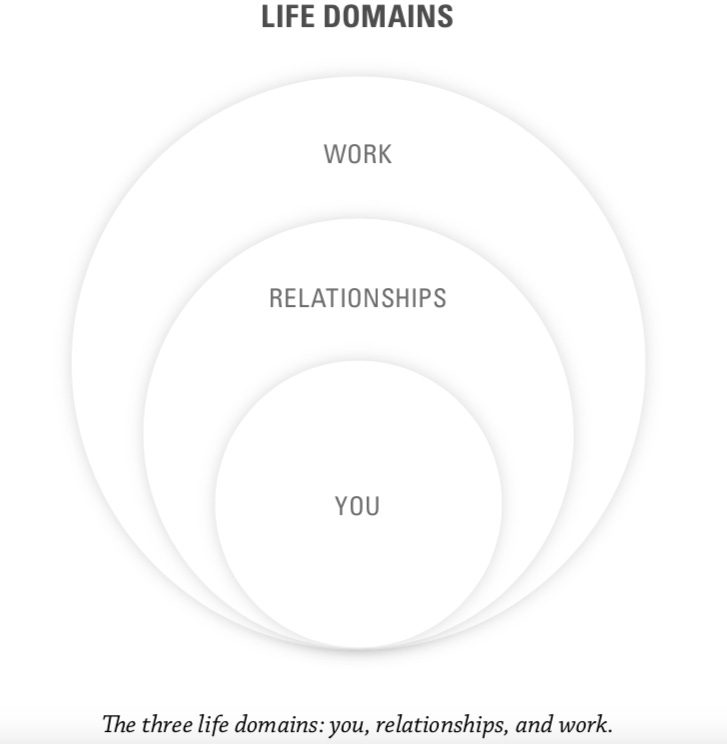
Next, assess your current alignment with each value: fully aligned, somewhat aligned, or misaligned.
Identify specific activities that fulfill each value, particularly those you’ve been neglecting.
Does health rank among your values, yet your previous job consumed the hours you might have dedicated to physical well-being? Now you have ample time for hiking, visiting the gym, cycling, or preparing nutritious meals.
Have you always yearned for adventure but could only plan around work constraints? Perhaps this is the moment to embark on that long-dreamed journey.
Have you wanted more quality time with loved ones? Perfect! Numerous research findings demonstrate that social support alleviates depression following trauma or loss. Strengthening these connections will accelerate your healing.
Examining life through the lens of values illuminates your next steps during uncertain times.
Engaging in activities aligned with your values creates traction, propelling you toward meaningful goals even amid uncertainty. Use timeboxing to add these activities in your calendar to establish structure when much of life seems chaotic.
During uncertain periods, you don’t need complete clarity about the path ahead. You simply need a functioning compass to guide your journey.
And remember—while uncertainty feels unbearable, the psychological principle of hedonic adaptation works in your favor. This intrinsic human capacity to return to baseline satisfaction levels regardless of circumstances means you’re likely to recover. Though the future may seem frightening, you’ll probably adjust to whatever comes more quickly than you expect.
An Awesome Layoff Support Group
https://mailchi.mp/d3175bb39ccc/gwxahg3rh5
by Charis Loveland, former EQ Evangelist and Global Program Manager for EPIC at Amazon
I’m so sorry you were laid off. It’s not your fault and you’re not alone.
I’m Charis, founder and CEO of Charisma Intelligence, my company that combines emotional and artificial intelligence to supercharge your success. Find me at https://www.linkedin.com/in/charisloveland/. I have worked in high tech for 22 years, and faced my 6th layoff in July from Amazon. With my expertise working in emotional and artificial intelligence, I am here to listen, support, and vent. Let’s create a safe space to learn from each other, offer support, and share stories.
We meet Mondays at 10 am ET at https://calendar.app.google/GP6sPTUaEP7YF55z7. If you can’t make this time, please find time to connect with me 1:1 at https://calendar.app.google/tK9J7yHqtyXktU1r5.
I hope these help you in some way as you navigate this next phase of your career journey. You’ve got this!
Warm regards,
Rich
This resource collection is incredibly valuable, especially the Stockdale Paradox framing. I went through a layoff two years ago and that "realistic faith" mindset really resonnates with what helped me then. The daily 3x3 practice is deceptively simple but super effective, I still do a version of it now even though I'm employed. What strikes me is how much the emphasis on staying connected reinforces that job searching isn't just transactional, it's deeply relational and emotional work.